Why Living Near Work Matters Again

After years in which working from home seemed to have become permanent, living near work is a real priority again for people in big cities like São Paulo. The reason is straightforward: between 2025 and 2026, banks, multinational tech companies and Brazilian firms brought back in-office requirements, and those who didn't organize their routines around it now feel the weight of traffic every day. In this article, you'll see the data behind this shift and what to consider when looking for a place closer to work.
The return to the office: why it happened again
Between 2025 and 2026, the return-to-office movement gained momentum in Brazil. According to Catho data cited in industry reports, about 69% of Brazilian companies planned to adopt a fully in-office model in that period. In banking, Itaú Unibanco, Bradesco and Santander announced, between June and August 2025, a minimum of four days a week in the office for corporate teams. Nubank also replaced its primarily remote model with a hybrid one starting in 2026.
A WeWork survey in partnership with Offerwise showed that 63% of Brazilian workers had already returned to the office, but 79% of them returned because the company required it, not by choice. That means many people who changed their routines had no time to plan, including when it came to rethinking where they live.
This isn't a movement unique to Brazil. Multinationals with operations in the country, such as Amazon, Google, Meta and Dell, followed global headquarters guidelines and began requiring physical presence on the same pattern used in offices in Seattle, Menlo Park and Austin. The reason companies cite most is productivity gains and a stronger organizational culture.
The price of commuting in São Paulo
The impact of the return to the office is felt most directly in cities with heavy traffic and overloaded public transit, like São Paulo. A survey by Rede Nossa São Paulo in partnership with the Ipsos-Ipec institute, conducted in ten Brazilian capitals in July 2025, showed that the average total daily commute reaches almost two hours (116.5 minutes), and 58% of respondents spend more than an hour just getting through all their activities in the day.
When you look only at the trip to work, the picture in São Paulo is even more challenging. According to the Viver em São Paulo survey, counting the round trip, residents of São Paulo spend an average of 1 hour and 38 minutes a day just commuting to work or school, reaching almost 2 hours when they use public transit. A study by Agência Mural, based on the Mapa da Desigualdade, shows that more than 2 million residents of Greater São Paulo take between 1 and more than 2 hours to get to work, with cases exceeding 3 hours a day in outlying areas.
Multiply that by a five-day work week and the result is significant: just going to and from work, you can lose the equivalent of a full workday each week in transit.
Why this directly affects quality of life
It isn't only a matter of comfort. According to a survey by the National Confederation of Industry (CNI) in partnership with the Institute for Reputation and Image Research (IPRI), roughly 36% of Brazilians spend more than an hour a day in traffic. That time is directly tied to three factors that real estate and HR research frequently points to:
- Productivity: arriving at work less tired and less stressed tends to improve performance throughout the day.
- Physical and mental health: the time recovered from the commute can go to sleep, exercise and a more balanced diet, factors linked to less stress and anxiety.
- Work-life balance: less time in traffic means more time for family, leisure and rest, which directly affects how well companies retain talent.
It makes sense, then, that "distance to work" has returned to the top of the priority list for people deciding where to live, especially among professionals who work in areas with a strong concentration of companies, such as Avenida Faria Lima, Avenida Paulista and the corporate hubs on São Paulo's west side.
How this is changing the decision of where to live
With in-office work back in the routine, the criterion for choosing a home is no longer just "how much does it cost" and now includes, with equal weight, "how much time will I lose every day." This shows up in at least three changes in behavior:
- Neighborhoods near employment hubs are worth more. Areas well connected by subway (metrô) and with quick access to business corridors, such as Pinheiros, Vila Madalena and Perdizes, have seen even more demand from people who work on Faria Lima, on Avenida Berrini or downtown.
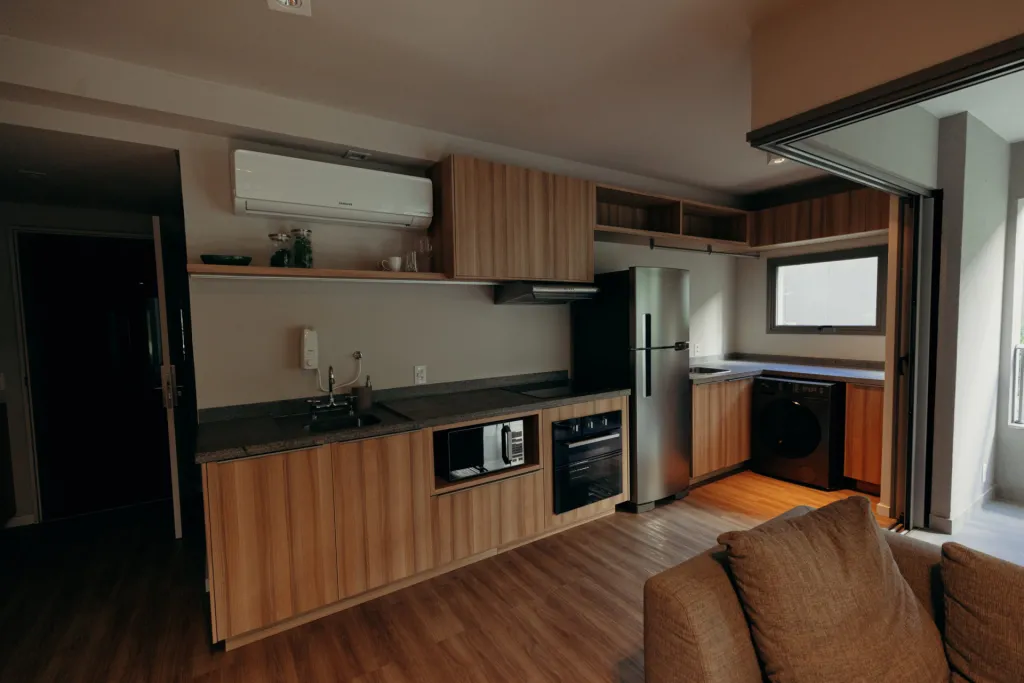
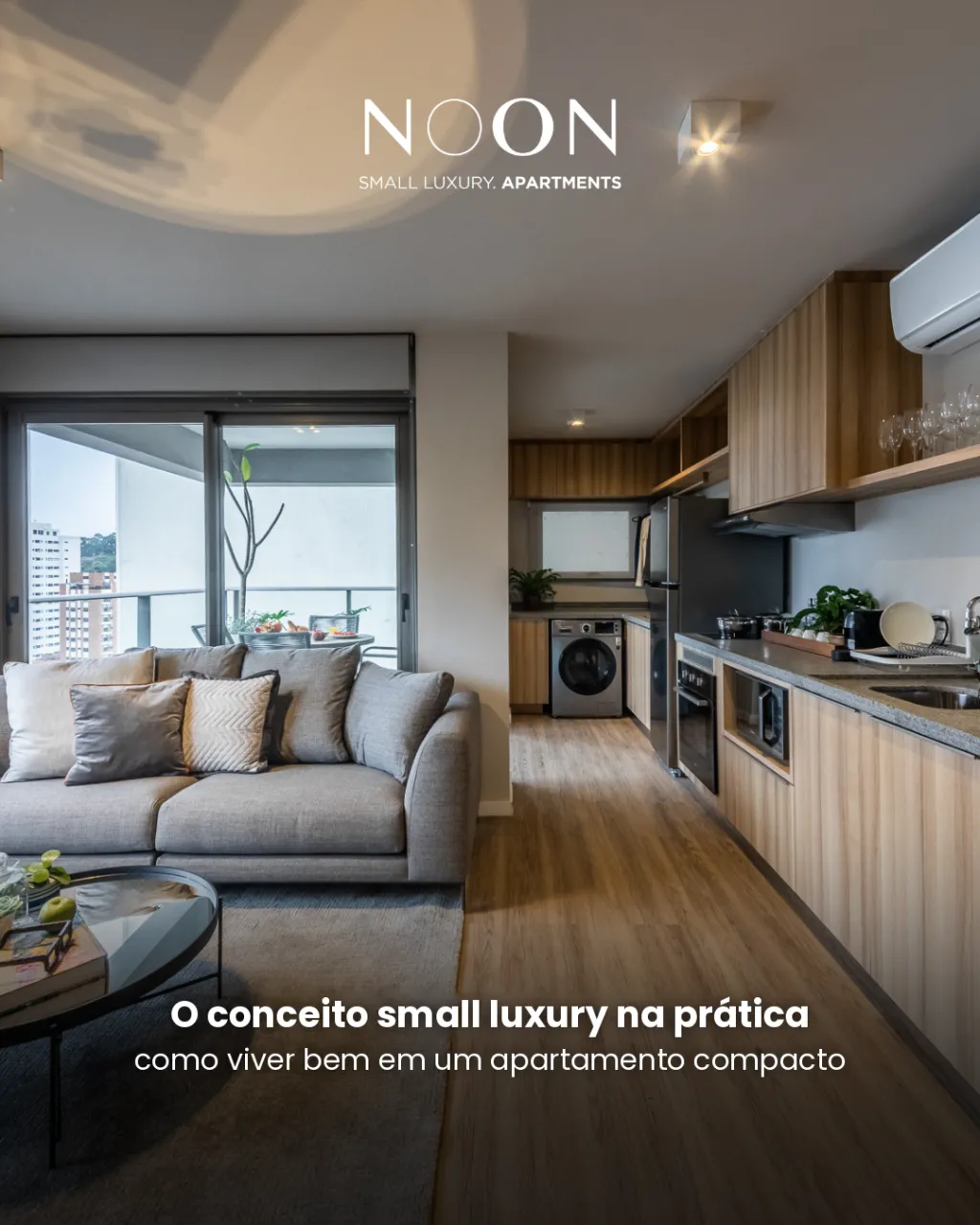
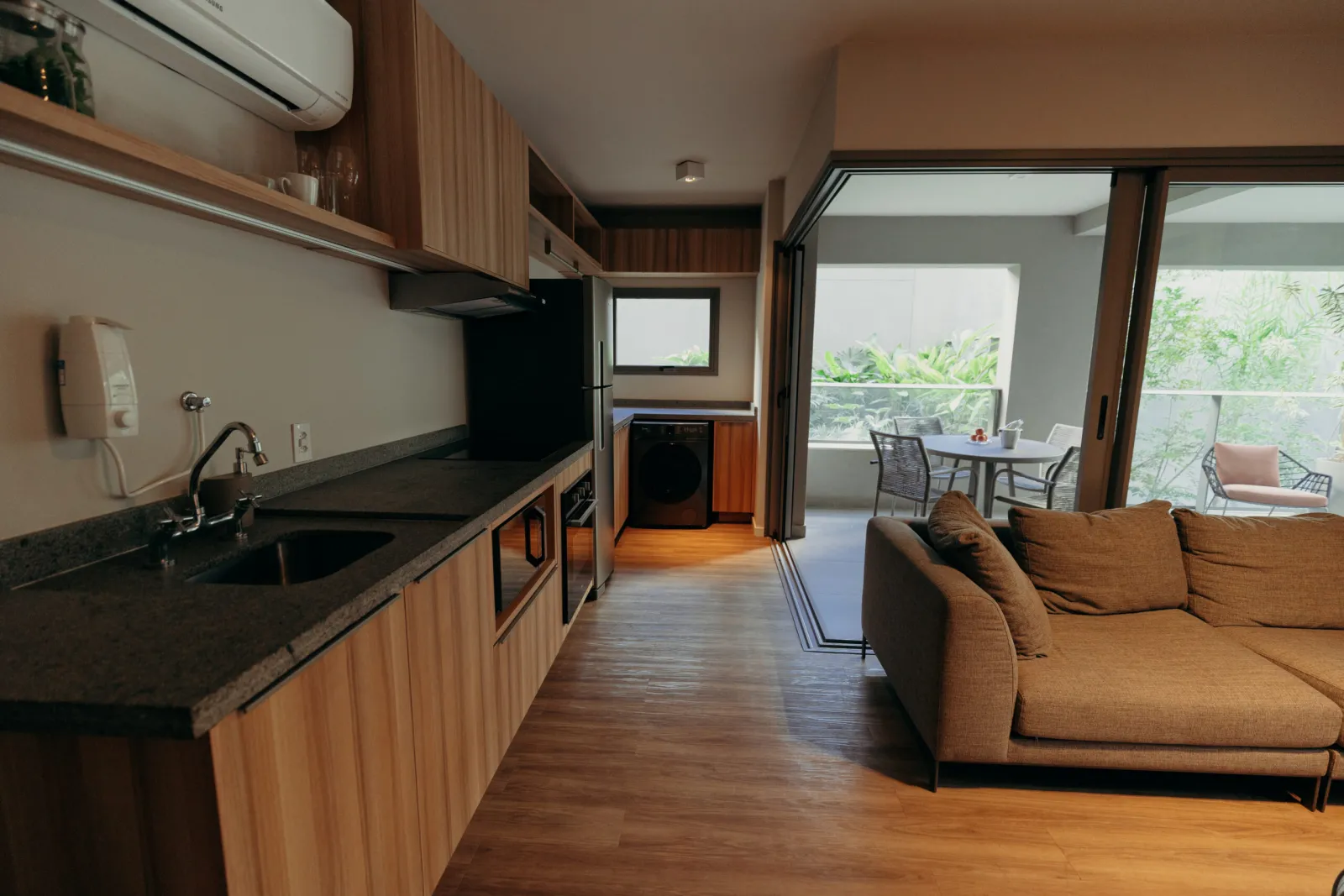
- A search for furnished, professionally managed properties. For those who moved back to the office without planning, a property that is already furnished, with services included and a quick rental process, solves the move without the time and cost of setting up a home from scratch.
- More weight on proximity to subway stations and bus corridors. The predictability of rail transit has come to count for more than the extra square footage of a property farther away.
What to consider before looking for an apartment near work
Before committing to a move, it's worth mapping out a few points calmly:
- Real distance to the office, counting rush hour and not just straight-line distance.
- Connection to subway stations and bus lines, since rail transit is usually the most predictable at the busiest times.
- Surrounding infrastructure, such as markets, pharmacies, gyms and places to eat a few minutes away.
- Type of property management, since rentals run by specialized companies tend to offer more support than informal arrangements.
- Furnishings and included services, which cut the time and cost of moving for those who need to get organized quickly in the face of a return-to-office mandate.
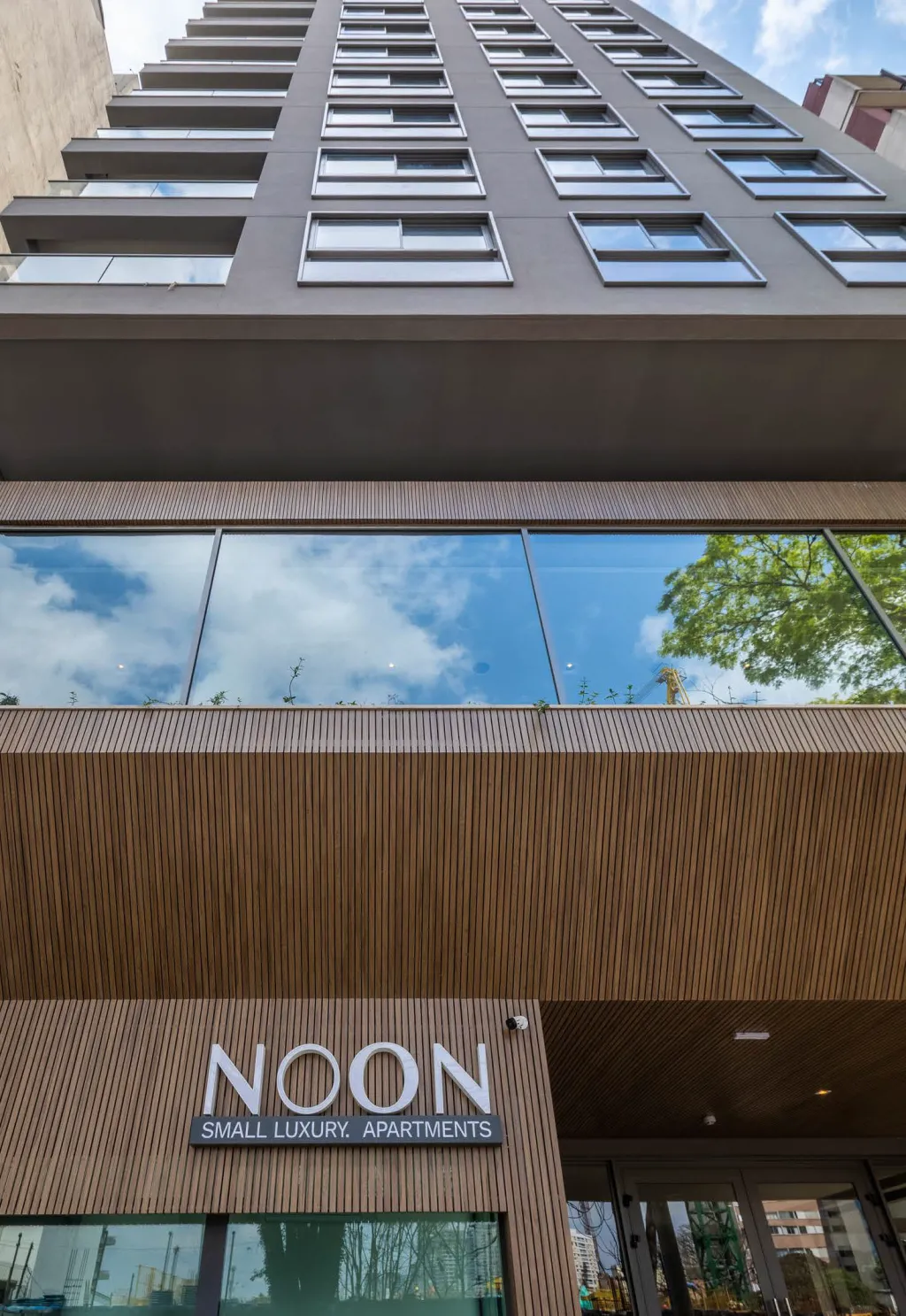
NOON Vila Madalena: living near São Paulo's main work hubs
For those who work in the main corporate hubs on the west side, NOON Vila Madalena brings together exactly the factors that now weigh most in this decision. Located on Rua Aimberê, in Perdizes, 350 meters from Vila Madalena subway station, the building offers:
- Studios and apartments from 25 to 71 m² (about 270 to 760 sq ft), already furnished and ready to live in.
- Easy access to Avenida Faria Lima, Avenida Paulista and the Pinheiros area, cutting commute time to the city's main employment hubs.
- Professional rental management, with concierge, tidying, cleaning and laundry included.
- Full common areas, with a pool, an equipped gym, a gourmet space and an in-person 24-hour front desk.
If you have already decided to prioritize proximity to work, also check out our complete guide to furnished studios for rent in São Paulo and our piece on why living in Perdizes pays off for those looking for this prime location.
In closing
The return to in-office work has brought back a calculation many people had set aside: how much time lost in traffic costs your routine, your health and your productivity. Living near work is no longer just a matter of convenience; it's a strategic decision again. For those who work in São Paulo's main corporate hubs, NOON Vila Madalena brings together location, facilities and professional management at a single address.